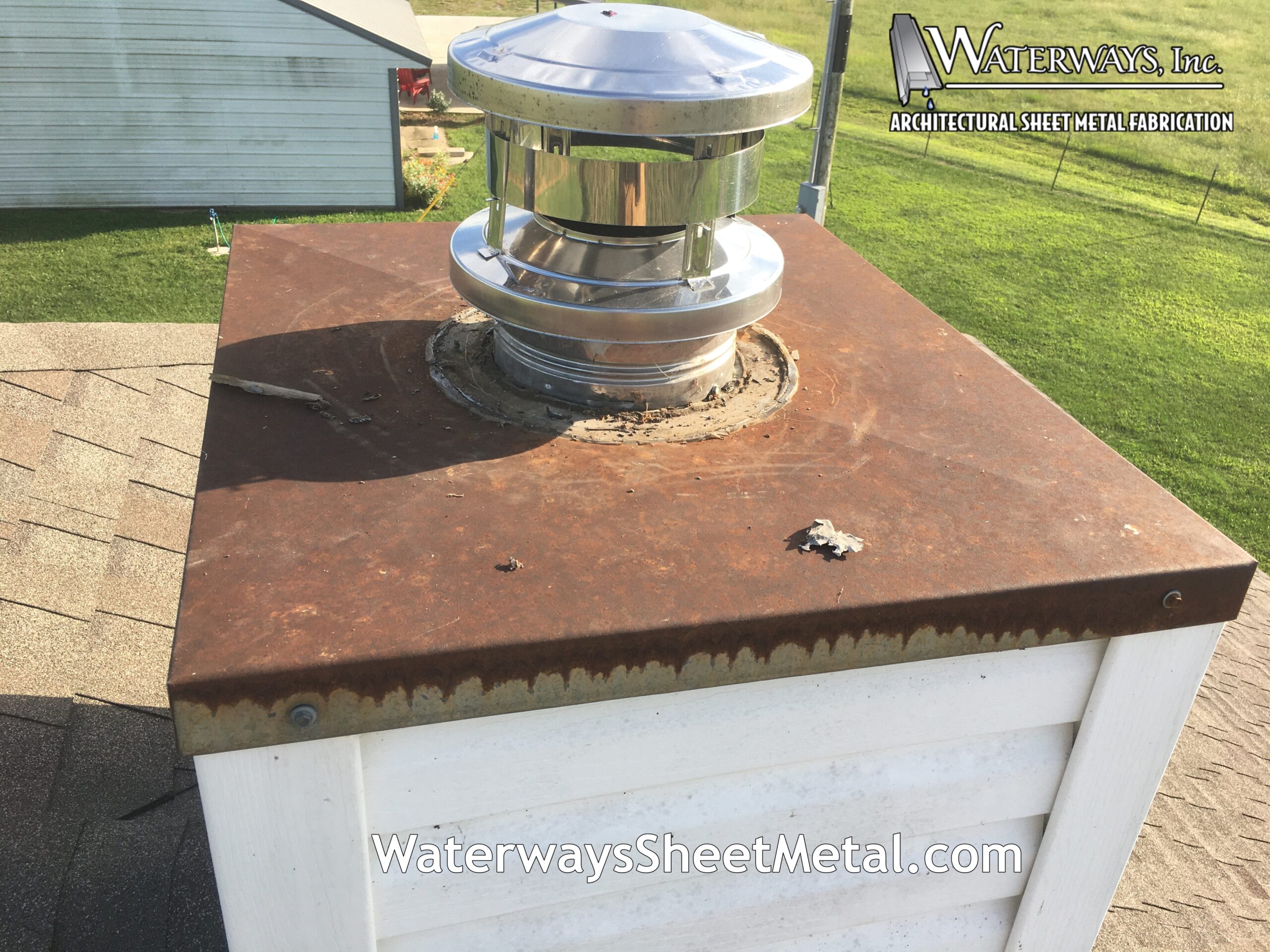
Pictured below is a leaky chimney top flashing we were asked to repair.
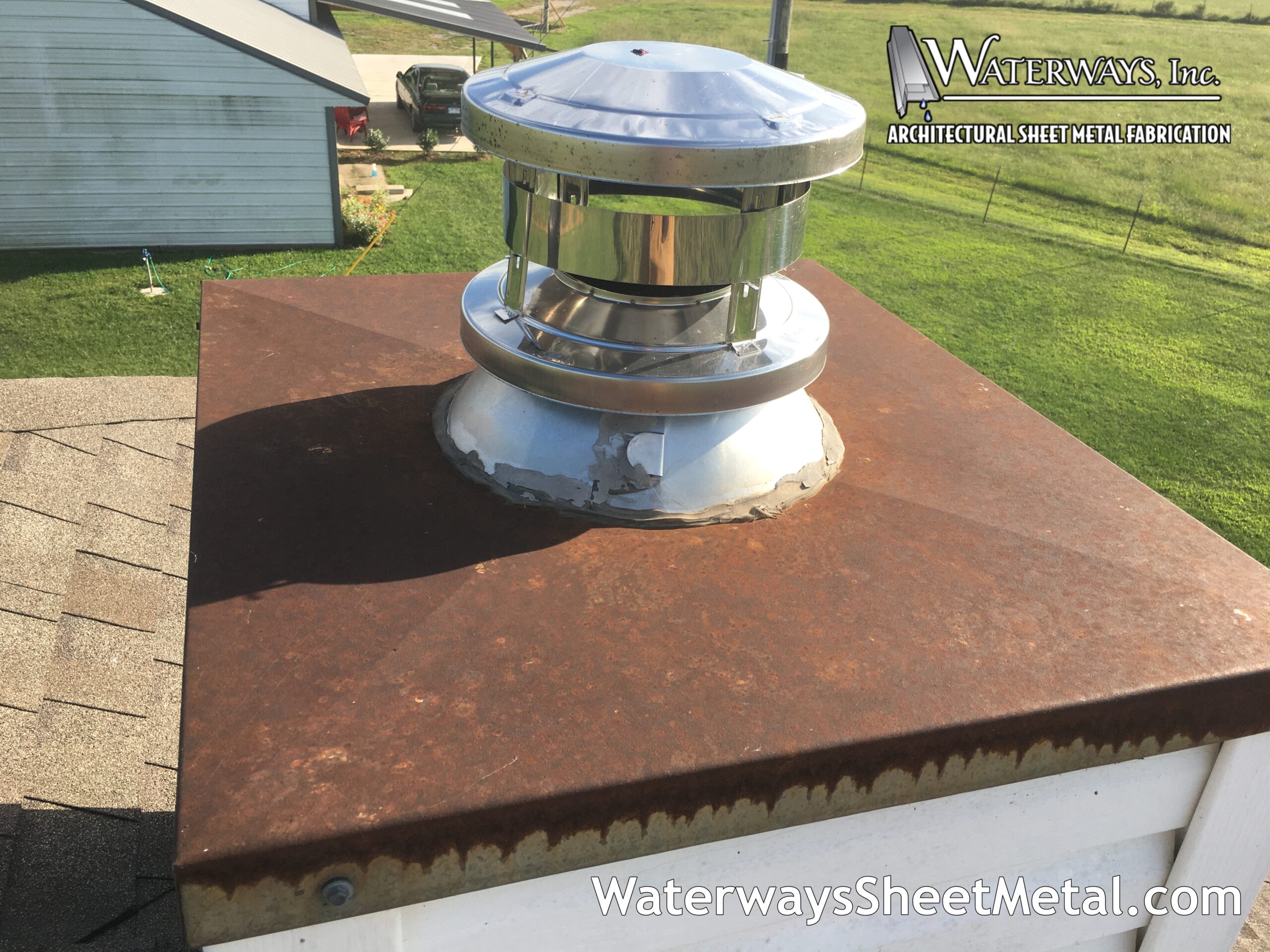
First, we removed the dome-shaped storm collar which covered the flue opening, along with the caulk which was previously used to seal it. Caulked openings are frequently found to be leak-points. We provided a permanent solution, as shown below.
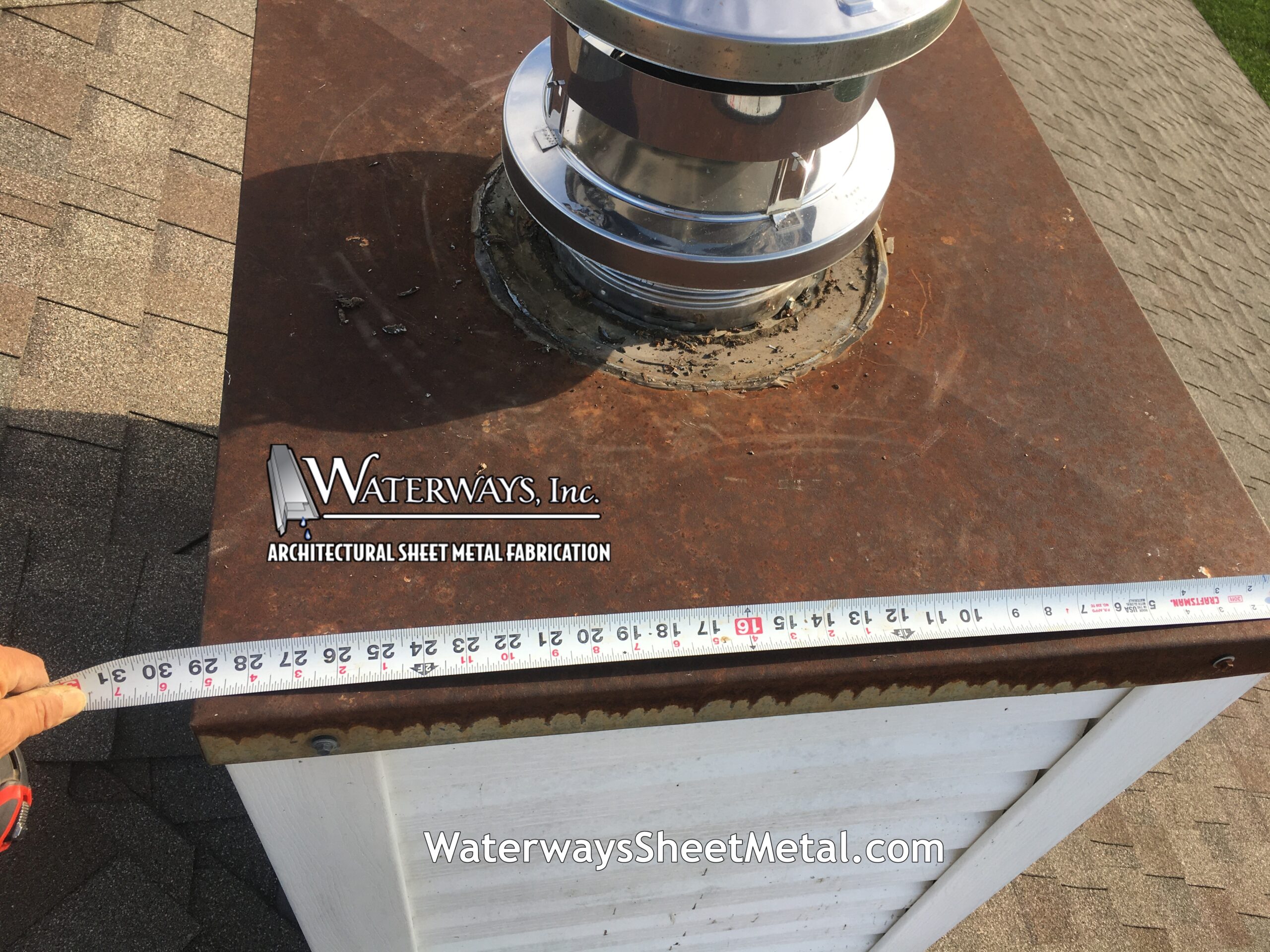
Measurements were made to replace the failed chimney top with a soldered copper flashing.
A new chimney top was constructed from high-grade copper sheeting. Notice the collar was soldered in place *before* the hole is cut. This allows us to check for any leaks which may exist in the soldered connection. The method shown proves the seal is water-tight. This procedure is superior to that normally used by manufacturers who cut and bend tabs to make the collar connection. Each cut in the copper introduces another failure point, where tiny openings might fail to be completely sealed.
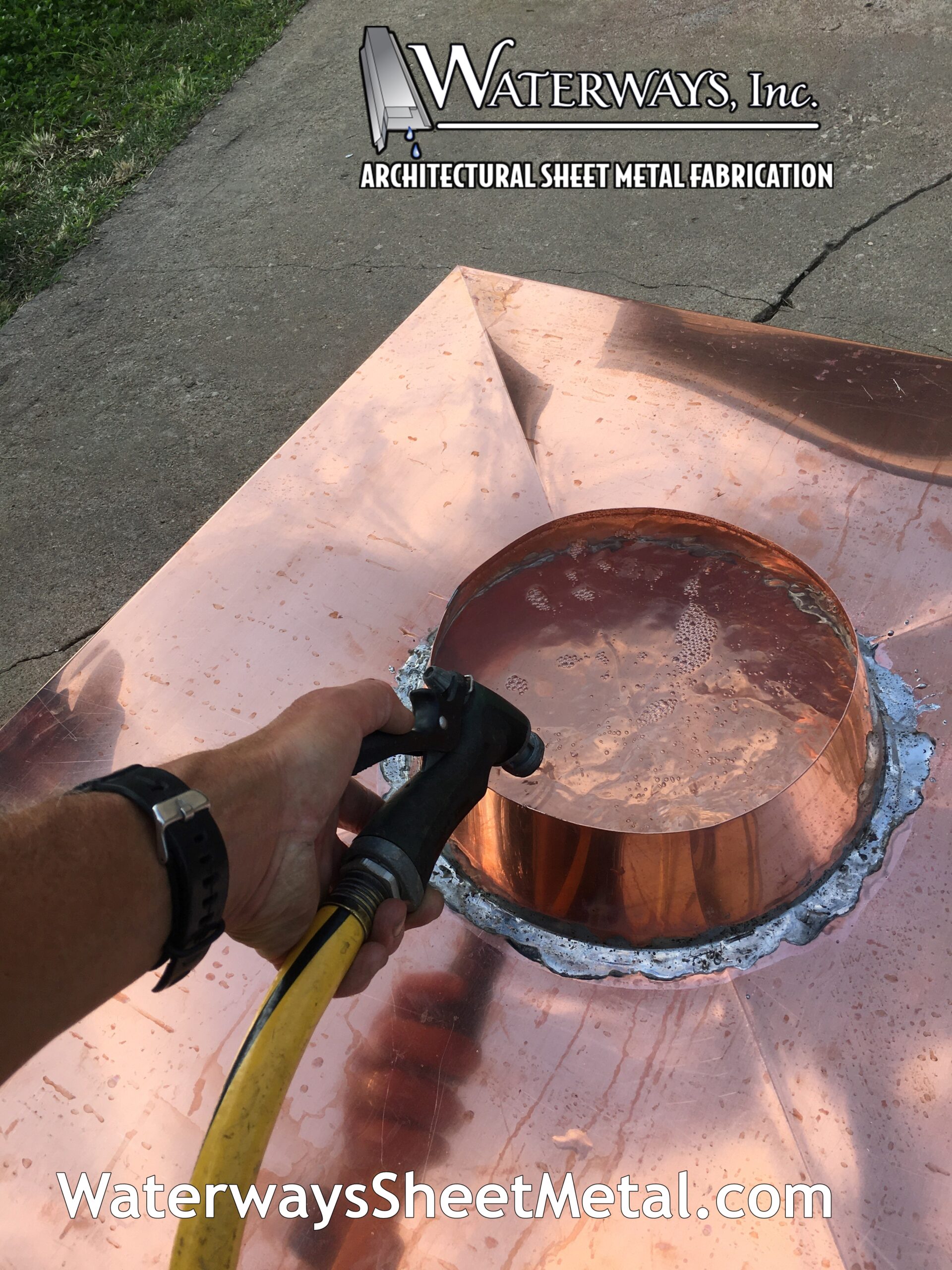
After proving our soldered connection is water-proof, we then cut the center opening one inch (1") smaller than the collar. This allows us to fold up the extra material to form an internal valley, or "moat", inside the joint. This is a secondary measure to protect from any possible failure point which might develop in the future. In the unlikely case that any moisture does get past the soldered rim, it will be caught in this lip, where it can naturally evaporate, rather than drip down inside the chimney.
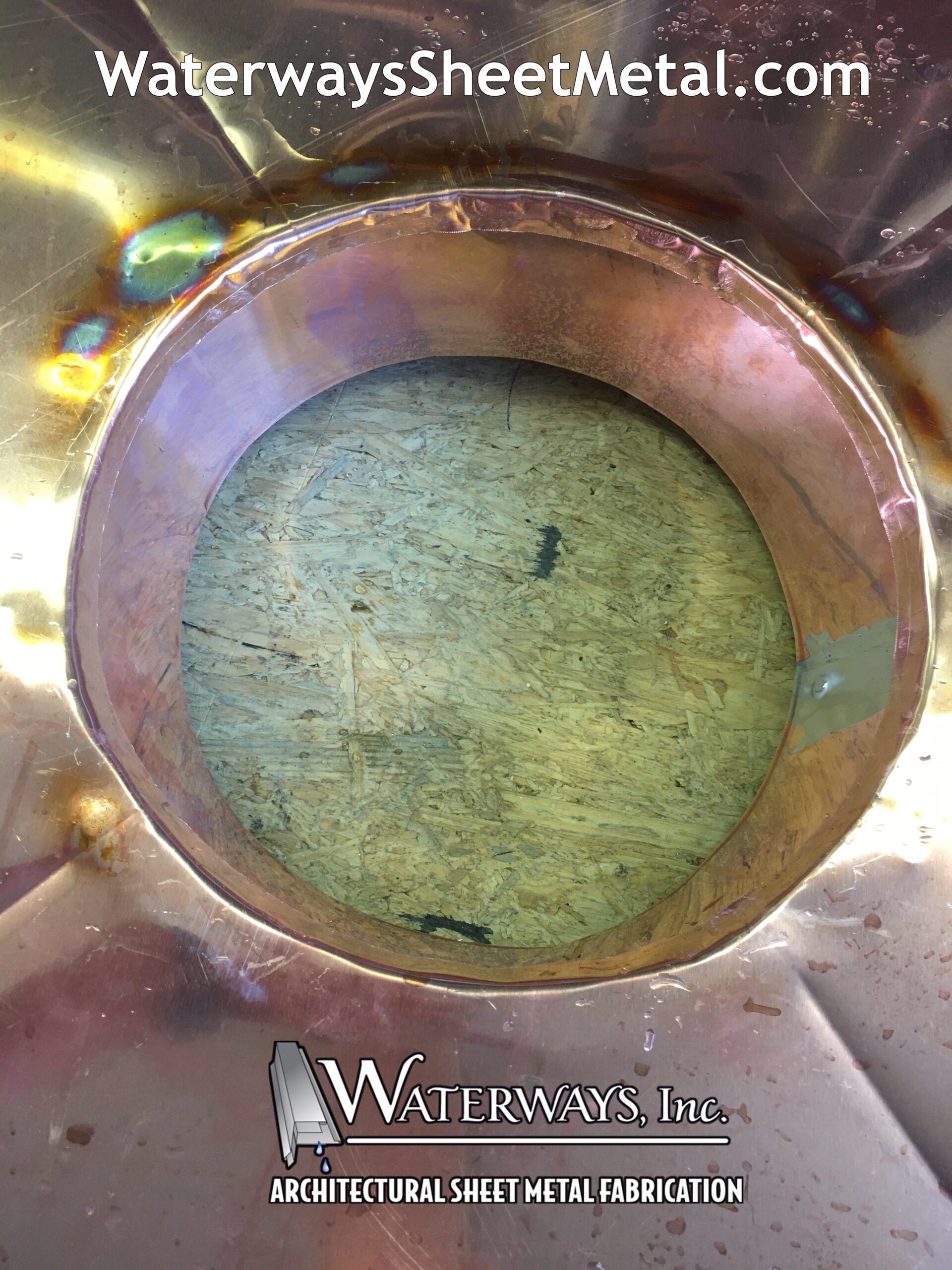
Here's a view of the top-side, showing the "moat", the secondary safety measure we use to further prevent moisture from entering the chimney.
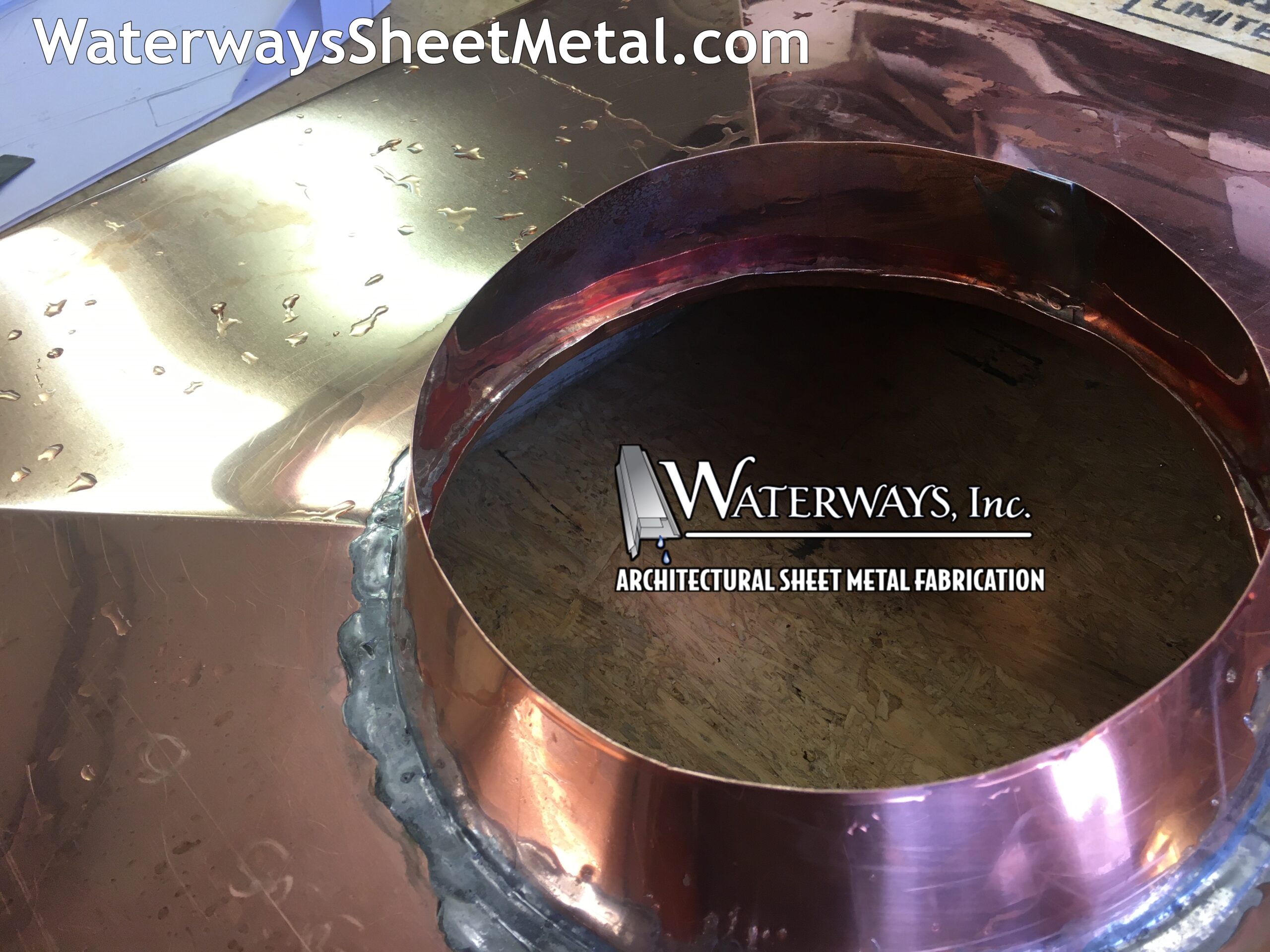
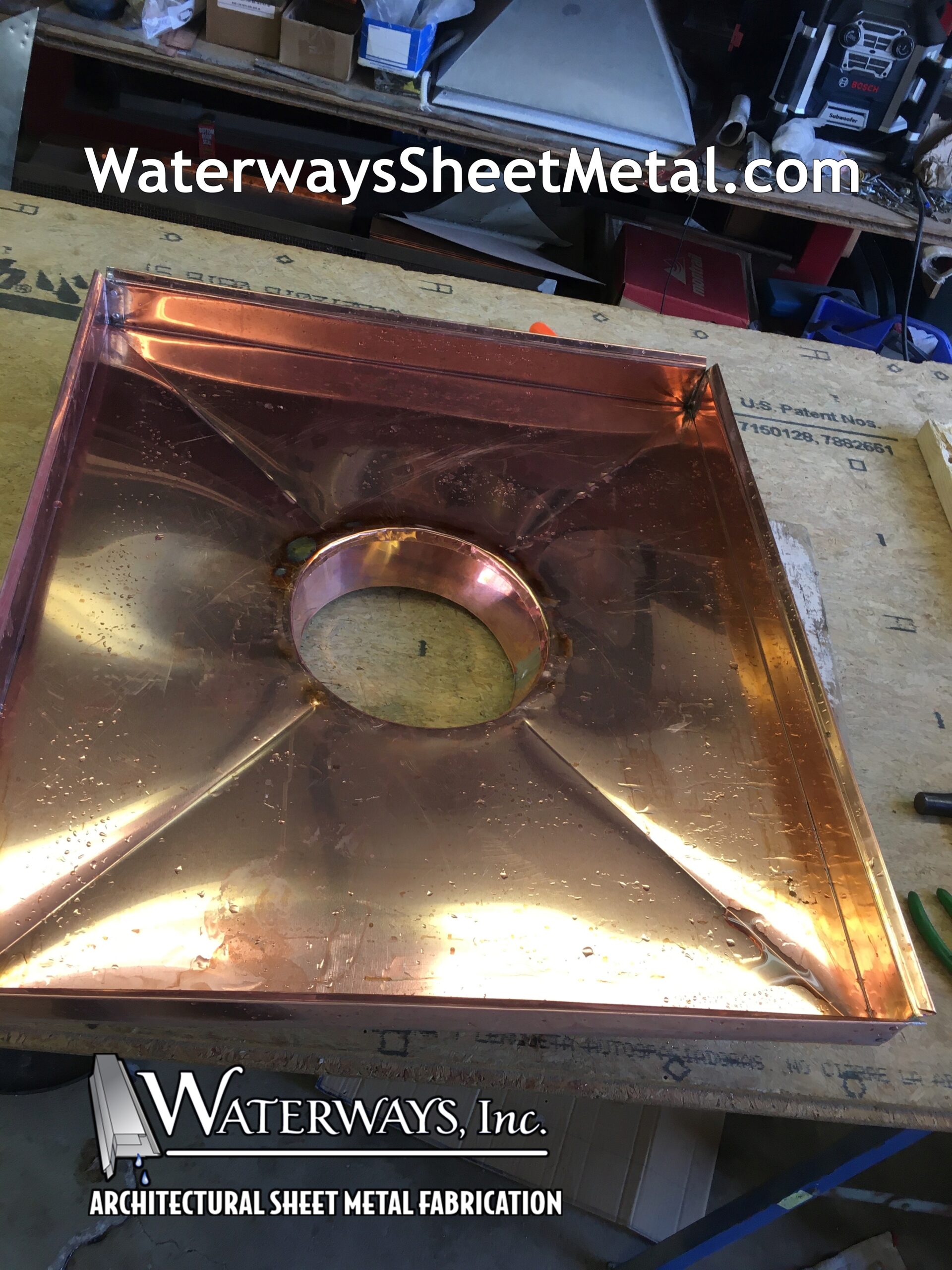
Here's a view of the underside of the chimney top flashing.
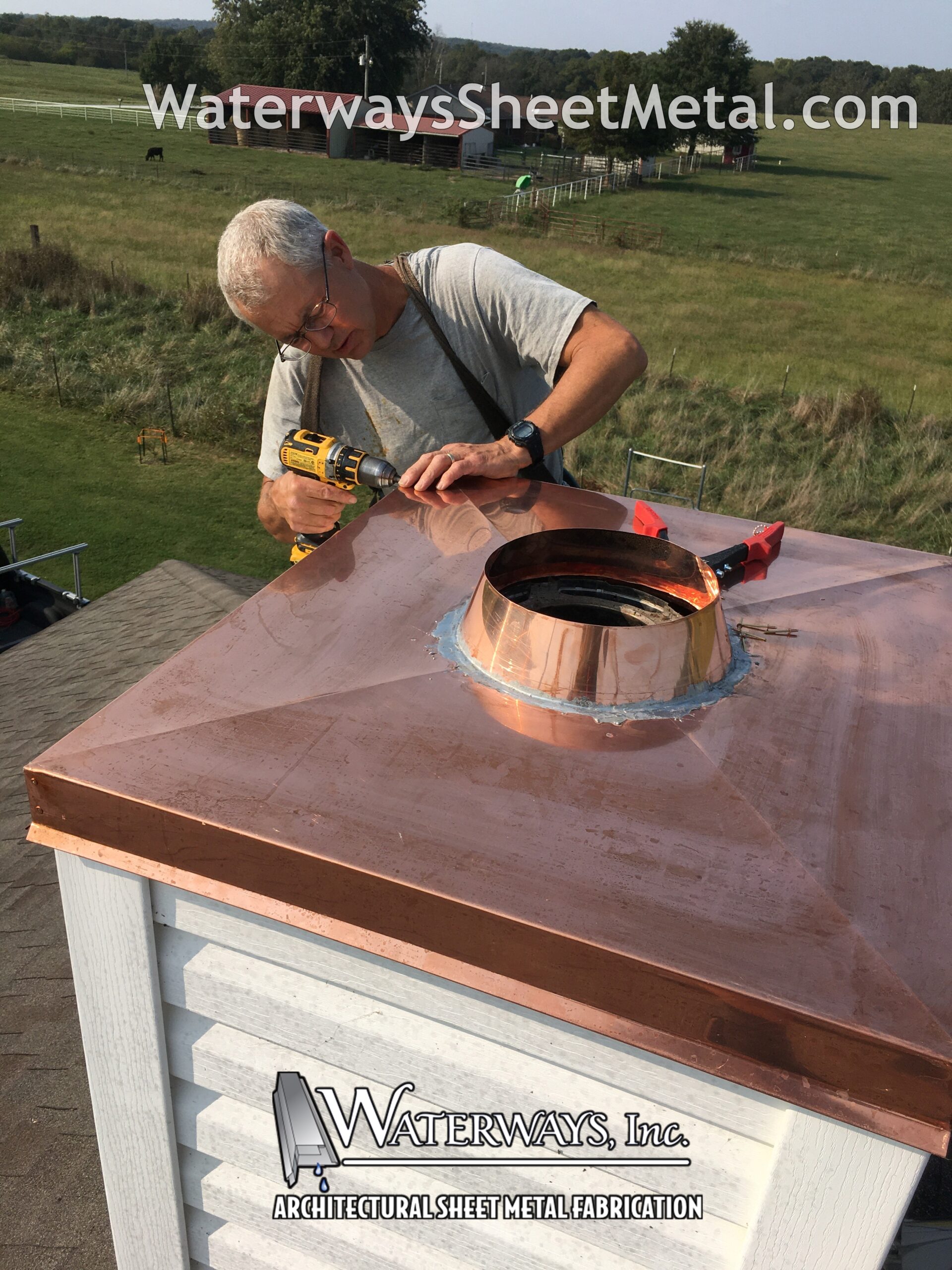
Ray Hines is attaching the new chimney top flashing to this wood-clad chimney.
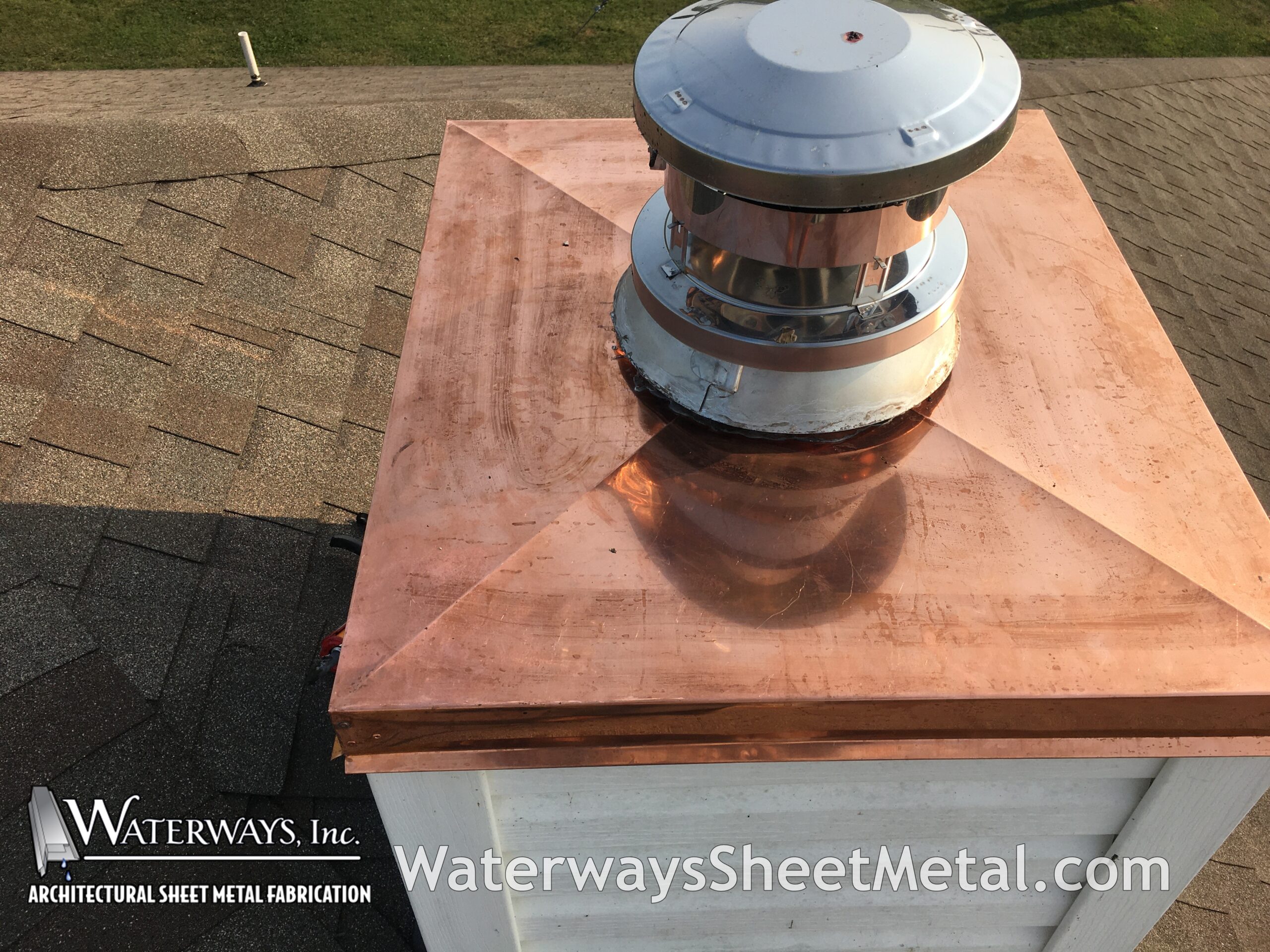
The original storm collar was replaced to cover the flue opening, but no caulk will be needed, because the new soldered opening is water-tight.
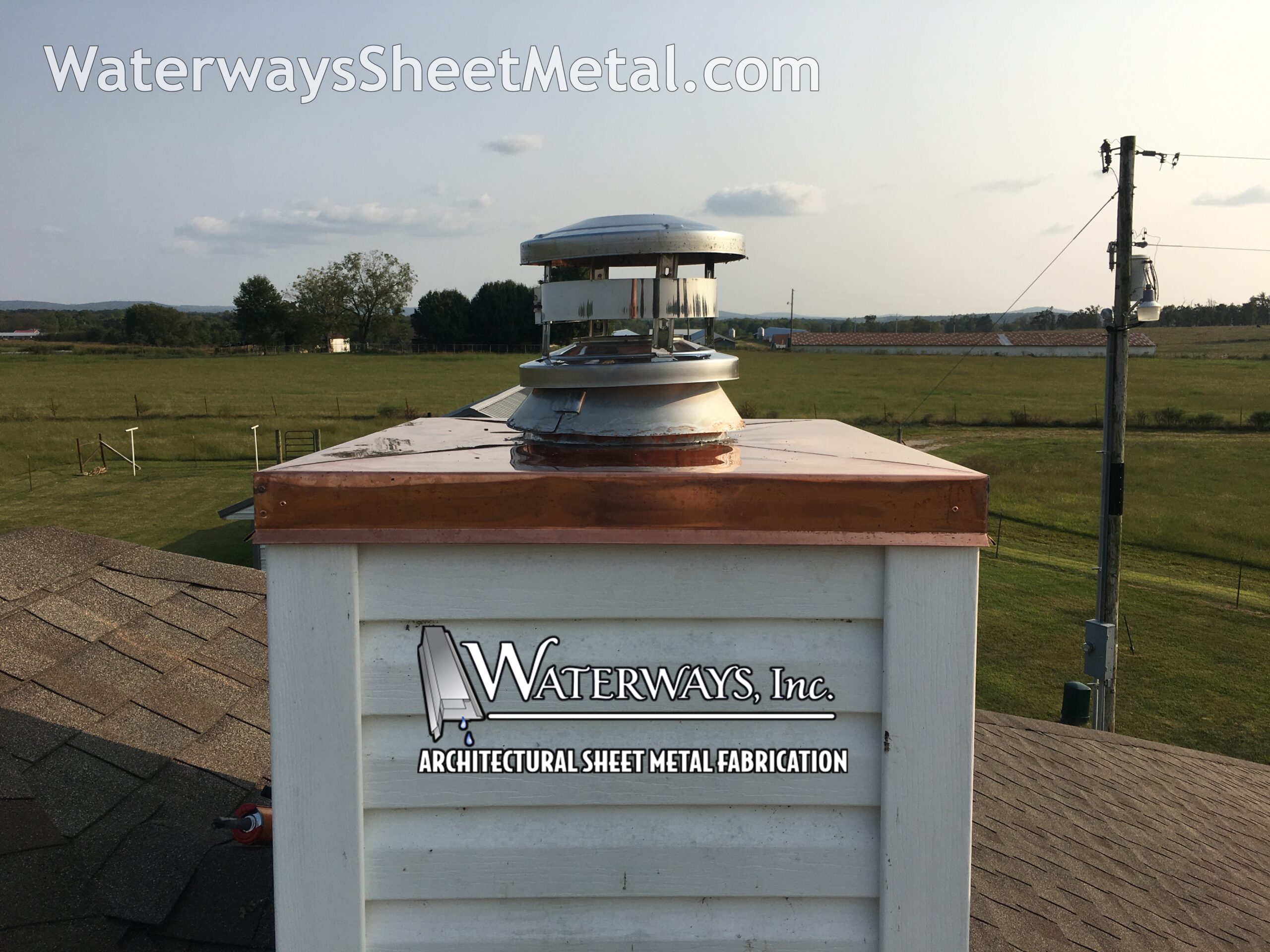
This top-view shows chimney top flashing that should be maintain its integrity for the life of the building. Notice the extra protection this chimney top flashing provides with the "kick-out" lip at its edge. This feature causes moisture from the top to drip *outside* the siding, which helps avoid stain lines which can develop from daily dew on the copper surface.